
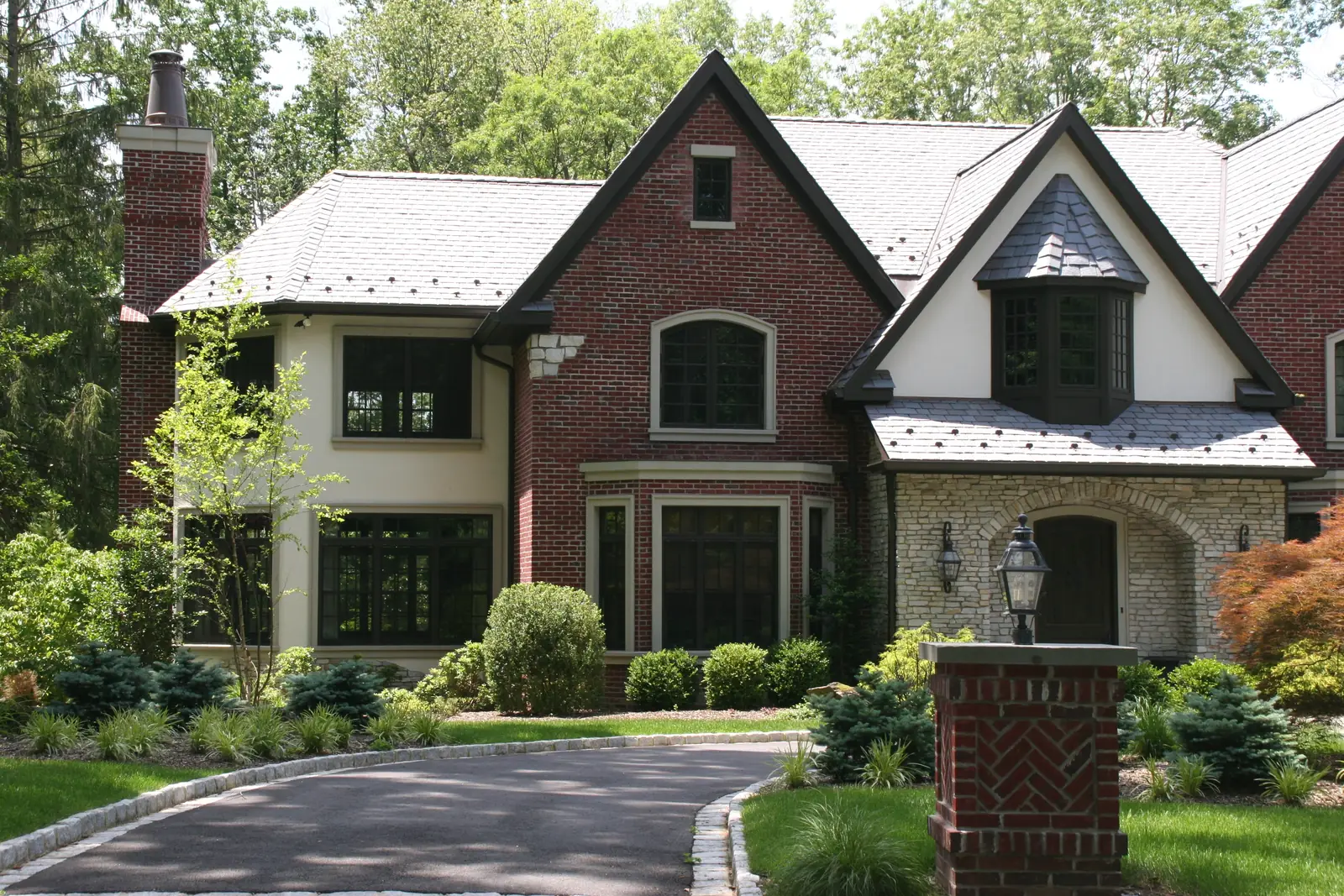
Brick Veneer vs Stucco: Which Is Better for a Florida Block House?
Brick vs stucco on a concrete block house is a trade between cost and upkeep. In a national cost guide, stucco’s installed price starts lower, and repainting sound stucco costs less still. Brick veneer costs more and needs a concrete ledge or footing under it. In return, clay brick needs no paint.
Both suit a block wall. A Florida plastering trade bureau calls stucco on concrete block one of the most successful and popular building systems in Florida. We lay full-size clay brick veneer over concrete block walls across Greater Orlando. Stucco is a plasterer’s trade, and we leave it to plasterers.
What is stucco, and what is brick veneer?
Stucco is cement plaster. The Florida Building Code calls for at least two coats directly over masonry, and at least three over lath. The bureau says block and stucco share the same basic ingredients and are extremely compatible.
Brick veneer is a single layer of real clay brick, 3 to 4 inches thick, in front of the wall. It is a facing: the code lets it carry no load except the weight of the brick above it. Metal ties hold it to the wall, and each tie serves no more than 2.67 square feet. Lintels carry the brick over windows and doors.
How do brick veneer and stucco compare?
| Stucco on concrete block | Full-size clay brick veneer | |
|---|---|---|
| What it is | Cement plaster, two or more coats on the block | One layer of real brick, 3 to 4 inches thick |
| What holds it | Its bond to the block | A concrete ledge or footing, plus metal ties to the wall |
| At windows and doors | Corners are typical crack spots | Lintels carry the brick |
| Water | Stucco, paint and sealants are the first line of defense | An air space drains water to flashing and weep holes |
| Paint | Painted or color-coated; check the paint yearly | None needed |
| Yearly care | Re-caulk around openings; expect some cracking | Inspect added brick yearly, sealant joints and cracks included |
What does brick vs stucco cost?
These are market numbers from a national cost guide, not our price list.
| Work | Market range |
|---|---|
| New stucco, installed | $7 to $17 per square foot |
| Stucco on a 2,500 square foot house | $12,500 to $42,500 |
| Painting a stucco house | $1.00 to $5.50 per square foot, or $2,400 to $8,100 on average |
| Re-stucco: remove the old and replace it | $8 to $21 per square foot |
| Full-size brick veneer | $12 to $18 per square foot |
| Brick veneer of any type on the front of a house | $2,000 to $18,000 for 250 to 750 square feet |
| Brick siding on a 2,500 square foot house | $20,000 to $45,000 |
Full-size brick, the kind we lay, is the $12 to $18 row. The front-of-house range also covers thin brick and faux brick panels. The same guide warns that not all homes can handle the extra weight of real bricks. For more brick prices, see what brickwork costs in Florida.
Which needs more upkeep in Florida?
Stucco needs regular care. A Florida plastering trade bureau says to inspect the paint at least once a year and repaint as needed. It also says to re-caulk around doors, windows and hose bibs every year. Stucco expands and contracts with temperature, and the bureau calls minor hairline cracks normal. Its cracking bulletin says builders and owners should expect some cracking.
The national cost guide above lists “cracks when the foundation shifts” among stucco’s cons. It also says stucco lasts 50 years or longer on average, up to 100 years if installed and maintained correctly.
Clay brick needs no paint. A Brick Industry Association technical note says paint brings repeated work that untreated brick masonry would not need. Paint can be very hard to remove from brick without damage. Painted brick can need repainting on a regular basis. Built right, brick needs little care, another note says. Added brick veneer should still be inspected at least once a year.
How does each one handle water?
On a stucco wall, the bureau calls stucco, paint and sealants your first line of defense from water intrusion.
Brick veneer works as a drainage wall. A Brick Industry Association note calls for an air space of at least a nominal 1 inch behind the brick. Rain that gets through the brick runs down that space to flashing and weep holes. A water-resistive barrier on the wall behind is a second line of defense.
The Florida Building Code puts flashing under the first course of brick above the ground and at lintels. Weep holes sit right above the flashing, no more than 33 inches apart and at least 3/16 inch across.
Can you put brick over stucco on an existing house?
It can be done. A Brick Industry Association note gives two paths: lay brick over the existing cladding, or remove the cladding first. Here, that cladding is the stucco. The note says removing it is usually simpler, since going over it takes an engineering analysis of the old finish.
Going over it has conditions. The brick needs support at its base and a working air space. Its ties are engineered and fastened to the wall behind, not to the old cladding.
Weight is the big question. Florida’s code wants the brick on a concrete ledge poured with the foundation. The ledge must be at least as wide as the brick is thick. For an existing house, the note lists an existing or new concrete foundation, or steel angles on the foundation wall. Florida’s termite rules add more. A new pour that leaves a hidden cold joint needs extra treatment or an approved physical barrier. Brick hung on a support secured to the foundation’s side needs a clear inspection space. That gap runs at least 6 inches from the bottom of the brick to any soil, mulch or walk.
On an existing house, the builder or an engineer and the building department decide how the brick is supported. The note itself says to coordinate any change to the footing with the local building official.
The edges change too. A new brick sill spans the air space. The brick stops just short of the soffit. If the eave does not cover the top of the brick, the note says to extend it.
Can you mix brick and stucco on one house?
Yes. Many homeowners put brick veneer on just the front or a smaller part of the house, one cost guide notes. Brick can cover the front wall or run as a wainscot along the bottom, with stucco on the rest.
Plan the line where the two meet. The Florida bureau lists places where different materials meet among the typical spots for stucco cracks. The brick side of that line is ours, and the stucco side is a plasterer’s. Brick arches and columns at the entry are part of our custom brickwork. Weighing stone as well? See our natural stone vs manufactured stone veneer guide.
Is brick veneer the right fit for your block house?
For real clay brick on your block house, see our brick veneer service. We look at the wall and the base under it and give you a quote. On an addition or a new custom home, we work alongside your builder. Call (407) 702-4316, and we will get back to you.