Pavers vs Concrete: Which Is Better for a Florida Patio or Driveway?
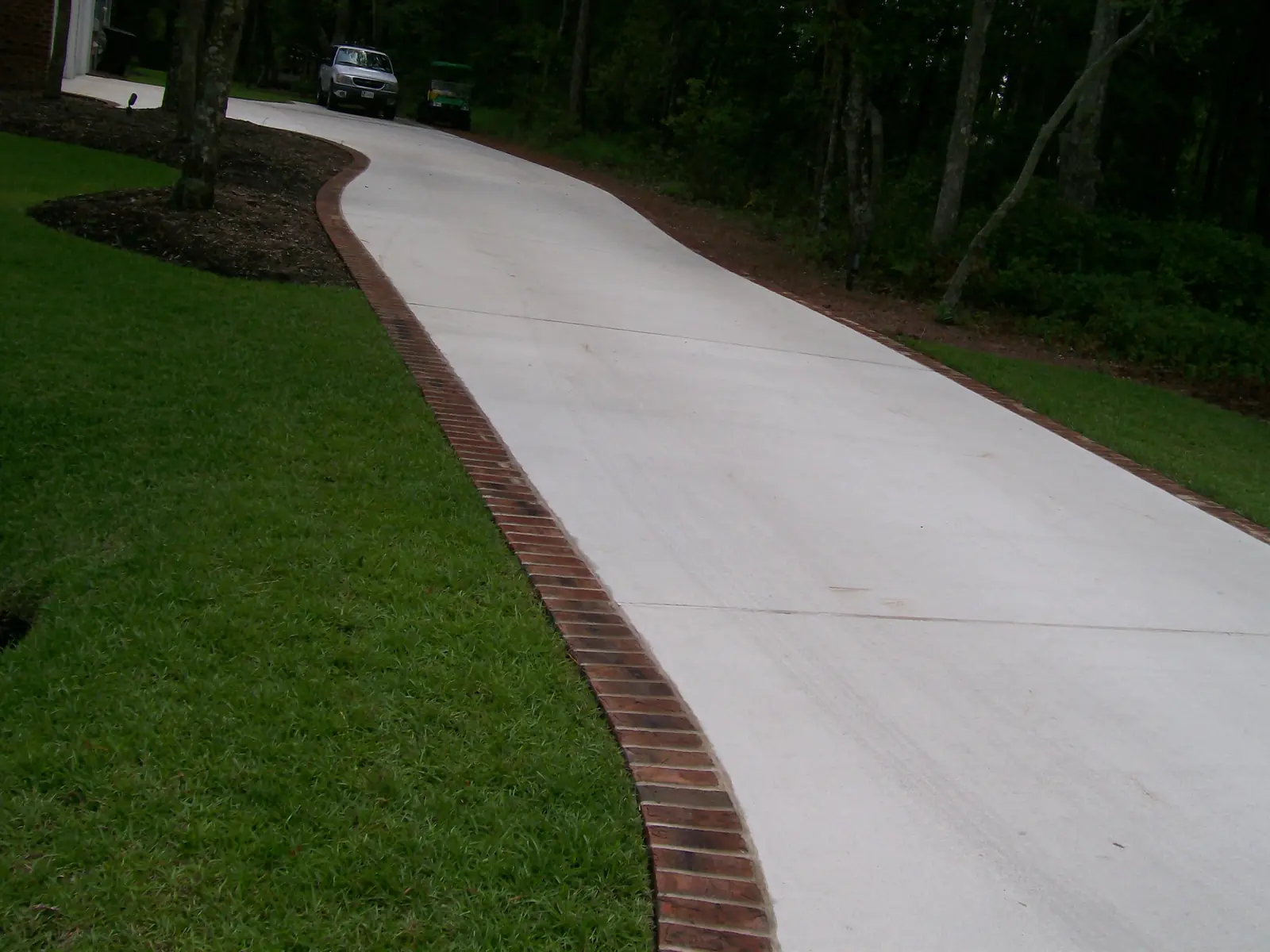
Poured concrete usually costs the least per square foot and gives you one solid, even surface. Concrete pavers on a sand bed cost more, but a broken paver lifts out and a new one goes in. The third route is real clay brick set in mortar on a concrete slab, called mud-set brick.
One national cost guide puts poured concrete at about $6 to $15 a square foot installed, and pavers at about $10 to $30. Those are market numbers, not our price list. We pour broom-finish concrete and build mud-set brick pavers on a slab we pour first. Concrete pavers on sand are a paver installer’s work, not ours.
What is the difference between pavers and poured concrete?
Poured concrete goes into forms wet and hardens into one slab. The National Ready Mixed Concrete Association says a push broom drawn across the top gives it a non-slip surface. It also says cracks cannot be prevented entirely, so joints in the slab keep them in check.
Pavers are separate units laid tight together. On a sand bed, the Brick Industry Association (BIA) says friction in the sand-filled joints holds each paver in place. One national paver guide calls concrete pavers the most popular paving material. Some products sold as brick are concrete formed into brick shapes, one home guide notes.
Mud-set brick joins the two. BIA says pavers set in mortar belong only over a concrete base, at least 4 inches thick. So the slab carries the load, and the brick is the face you walk on. We pour broom-finish concrete driveways and patios and the slab under the brick.
What do pavers and concrete cost per square foot?
These are market numbers from national cost guides, not our price list. Your space and your choices set the real price.
| Surface | Market cost per square foot | Kind of source |
|---|---|---|
| Plain broom-finish concrete driveway | $5 to $8 | National concrete guide |
| Poured concrete, installed | $6 to $15 | National cost guide |
| Concrete pavers, installed | $8 to $15 | National cost guide |
| Clay brick pavers, installed | $10 to $17 | National cost guide |
| Pavers in general, installed | $10 to $30 | National cost guide |
| Mud-set clay brick | A concrete slab, plus brick set in mortar on top | Qualitative |
The pavers-versus-concrete guide splits out the labor. Installation adds $3 to $5 a square foot for concrete and $7 to $13 for pavers. It says pavers take more time and labor than poured concrete.
The pavers alone tell a similar story. A paver guide updated in November 2026 lists clay brick pavers at $4 to $8 a square foot before installation. It lists concrete pavers at $4 to $6.
Mud-set brick costs more than plain concrete, since you pay for the slab and then the brick. Our mud-set vs sand-set paver guide breaks down those costs. For driveway size, thickness and tear-out, see what a concrete driveway costs in Florida.
How does Florida rain treat pavers and concrete?
NOAA’s normals give Orlando about 51 inches of rain a year. Every surface needs a way to shed that water. The Florida Building Code says impervious surfaces within 10 feet of a house must slope at least 2 percent away from it.
Concrete and mud-set brick shed water across the top. BIA says runoff from pavers set in mortar happens mainly at the surface. On sand-set pavers, BIA says small amounts of water work down through the sand joints over time.
Does concrete crack, and do pavers shift?
Concrete can crack. One national cost guide says concrete is more likely to crack over time from extreme temperatures or ground shifting. Control joints give those cracks a planned line to follow.
Sand-set pavers flex instead. BIA says if the pavement dips slightly, the pavers realign to the new shape. Without a firm edge, BIA says pavers can roll out of line, so the edge matters.
Mud-set brick sits on the slab under it. BIA says if a mortar-set pavement bends too far, it may crack along mortar lines or across pavers. That is why mud-set brick needs a sound concrete base.
Which one needs more upkeep?
Sand joints are open ground for weeds. One national cost guide says to clear weeds or moss from paver seams and joints from time to time. UF/IFAS notes that ants can nest under sidewalks, driveways and patios.
Repairs favor sand-set pavers. BIA says they can be lifted and put back with little sign of the work. The cost guide says swapping single pavers costs less and is easier than repairing concrete.
A broken brick set in mortar takes more work. BIA describes saw-cutting around the damaged paver to get it out. A new brick then goes back in fresh mortar.
Do you need a permit for pavers or a concrete slab?
It depends on your address. In unincorporated Orange County, the county says a permit is required anytime you pour concrete or place pavers. Inside a city, or in another county, the building department for your address decides.
If your HOA reviews exterior changes, get its approval too. Check with both before the work starts.
Which one should you choose?
| If you care about | Poured concrete | Concrete pavers on sand | Mud-set clay brick |
|---|---|---|---|
| Cost per square foot | Usually the lowest | Higher than concrete | A slab plus the brick |
| Fixing one spot | Harder | Lift and reset | Saw out and reset |
| Where rain goes | Off the top | Some soaks into joints | Off the top |
| The joints | Control joints | Sand joints | Mortar joints |
| The look | Plain, broom finish | Concrete in many shapes | Real clay brick |
| Who lays it | Our crew | A paver installer | Our crew |
Pick poured concrete when cost per square foot leads and a plain, even surface suits the space. Pick concrete pavers if lifting and resetting single units matters most to you. Pick mud-set brick if you want real clay brick with a concrete slab carrying the load.
How do you get a price for a brick patio, walkway or driveway?
We are based in St. Cloud and work across Greater Orlando. We pour the slab first, then set real clay brick in mortar on top. That covers patios, walkways, entries and driveways finished in brick.
See how we build brick paver patios, walkways and driveways, or call (407) 702-4316. We look at the space and give you a quote.